Announcement

Collapse
No announcement yet.

Coil Q

Collapse
X
 
  • Filter
  • Time
  • Show
Clear All
new posts

  • Sean_Goddard
    replied
    Minelab had the biggest raft of "B.S." patents in the know universe. From what I've read most are just hot air and pie filling with very little substance or info given away (B.S. Baffles Brain syndrome).

    I agree with you JC1 100% on this issue. I've seen the liars and thieves win too many times. Especially in the detecting industry, but then they play on the ignorance of the users, and lets face it to "buy" the lies these guys are telling, most detectorists must be very gullible (sadly) or is it a case of "I WANT to believe"?

    Leave a comment:


  • Farhad
    replied
    hi .evryone. i have a question about coil of miner-4 , i make alot of (2~3) coil
    for this metal detector but miner-4 dosent work , it is demo work after 1 min
    and coil is very very hot .
    1- what reason very very hot coil ?
    2- how make a suitable coil for miner-4 ?
    3- how do use type wire for make coil ?
    4- what do use size wire for make coil ?
    5- can i use a coil 1X1 m for this metal detector ?
    6- (if i can) then how make this coil ?
    7- do this metal detector work whith any coil or it work special coil ?
    if you know any information about make coil please
    tell me diameter outside & inside coil and type & size .
    please guide me english i cant understand germany thank you .

    Leave a comment:


  • JC1
    Guest replied
    Q with pics

    more Q


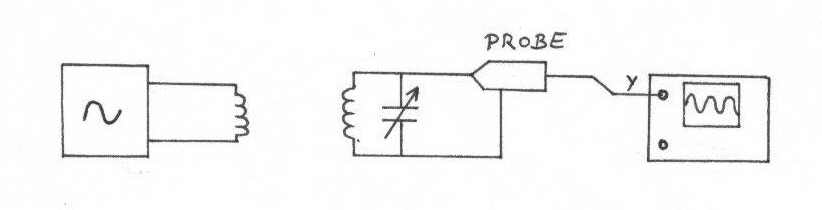
    From the given examples we can conclude: higher the quality - narrower the band and higher the sensitivity of MD (metal detector).


    Leave a comment:


  • JC1
    Guest replied
    Now

    Hi Everyone,

    Now the Q on the coil on most of these PIs is not going to make

    much, if any difference, especially with the coil heavily loaded

    with some damping resistor of 200 - 1000 ohms.

    On vlf may notice more difference as

    Q = resonantfrequency/bandwidth

    so you can see if nothing else on the receive side, the bandwidth

    is narrower on a high Q coil and capacitor(use a quality cap here)

    tuned circuit.

    here is how to measure it.


    Also there are Practical considerations in coil construction which

    preclude any advantages of the higher Q.

    So don't waste your life making high Q coils

    you probably have bigger problems.

    Leave a comment:


  • JC1
    Guest replied
    bad guys win

    Originally posted by Max View Post
    Hi JC1,
    I don't know why I asked you that things... I don't know if Georgi has one or more patents about his stuff... but I think would be better for him having similar stuff...to protect his work and possibly any "innovation" he realized in e.g. his coils...anyway... it's pure curiosity...
    I was thinking that if he hasn't any patent or similar he cannot win in court if someone replicate his stuff or patent stuff before he does... and the like.

    Yes... all stuff for lawyers and "liars"... but at the end sometimes liars win in the real world... and honests often lose in courts.
    Just my thoughts...

    And yes interesting engineering... and lot of juice respect to other stuff you can read in patents... totally agree... that often big players patent a "special" glue or a "special" paint...

    I'm thinking e.g. at the White's patent of the epoxy-graphite stuff what a discovery !

    These are real pearls for me... I read and laugh all the time... but, actually, they make also money that way... and I laugh more and more...

    What to say... when there is a BIG secret is better avoiding patents... and leave some epoxy do the bunkering work ... covering from enemy eyes trade secrets... I mean the stuuf that work!

    Best regards,
    Max


    Yea the bad guys win alot of the time, from my understanding of

    stories in court. The judges are supposed to be technical but of

    course are not and the lawyers are even dumber. One quick story

    is company lost to company who copied electronics design exactly

    but replaced noninverting opamp with two inverting opamps, same

    gain bandwidth etc. Judge felt that was enough of change to throw

    out court case, my friend said the other company didn't understand

    noninverting opamps and thats why they changed that.

    Once in court, anything can happen.

    bad guys win alot.

    Leave a comment:


  • JC1
    Guest replied
    So

    So if you use your multimeter to construct a coil

    that has the highest inductance

    with the lowest resistance

    you will have a higher Q

    than one with low inductance

    and high resistance.

    Leave a comment:


  • Max
    replied
    Originally posted by JC1 View Post
    Why are you asking me? I'm not a patent lawyer. Yea just good

    engineering, not supposed to be patentable, but maybe just his

    country, not all coutries, maybe worded funny. Who knows.

    Almost all this "regular" stuff has been done in the past, so have to

    read any patents, like some don't patent Q, but special way of

    winding special insulated special wire with special glue, that you

    can patent and then "beat up" anyone new in court, with money you

    already made and he has to fight without much money in new deal.

    That's all stuff for lawyers and liars.

    Doesn't concern me. Or most of us, we will copy whatever for our use.

    So does the Nexus/Georgi have any patents? what is the number?
    Hi JC1,
    I don't know why I asked you that things... I don't know if Georgi has one or more patents about his stuff... but I think would be better for him having similar stuff...to protect his work and possibly any "innovation" he realized in e.g. his coils...anyway... it's pure curiosity...
    I was thinking that if he hasn't any patent or similar he cannot win in court if someone replicate his stuff or patent stuff before he does... and the like.

    Yes... all stuff for lawyers and "liars"... but at the end sometimes liars win in the real world... and honests often lose in courts.
    Just my thoughts...

    And yes interesting engineering... and lot of juice respect to other stuff you can read in patents... totally agree... that often big players patent a "special" glue or a "special" paint...

    I'm thinking e.g. at the White's patent of the epoxy-graphite stuff what a discovery !

    These are real pearls for me... I read and laugh all the time... but, actually, they make also money that way... and I laugh more and more...

    What to say... when there is a BIG secret is better avoiding patents... and leave some epoxy do the bunkering work ... covering from enemy eyes trade secrets... I mean the stuuf that work!

    Best regards,
    Max

    Leave a comment:


  • JC1
    Guest replied
    Q meter


    Now of course anything you do to a coil will change

    the Q like when it is over this soil or that soil

    so what.

    you measure them in the air if you want to compare.

    Leave a comment:


  • JC1
    Guest replied
    Not

    Originally posted by Max View Post
    Hi,
    uhm... his multimeter will read inductance at the multimeter internal frequency... depending of strategy used by meter to give readings of inductance...no good that way...

    You know that "real" coils could slightly change inductance with frequency variations... so he have to measure (or calculate) inductance at exact TX operating frequency.

    Then he must consider the effect of shields too... that's another important parameter... then he must consider the effect of mineralization making resonance and Q optimization for a medium soil model (few iron minerals)... etc etc etc

    If we want split hairs we need at least to find params at operating conditions !

    Or not ?

    Best regards,
    Max


    Not.

    Leave a comment:


  • JC1
    Guest replied
    Huh?

    Originally posted by Max View Post
    Hi JC1,
    I've read the "science" pages on the nexus website... uhm... ok Q is the quality factor... yes all true... less losses in the wire... so better energy transfer but but but....

    Now one thing is puzzling me... if this is the "secret" (I mean full-resonant coil and maximum Q both sides for TX and RX) how Georgi patented that ?

    If he patented that I mean...

    I think that all this stuff cannot be patented... cause many other people do it before... am I wrong ?

    All electronic course explain that you have maximum e.g. oscillation peaks at highest Q... but then maybe Fisher or some others patented that stuff for making MD coils in 1940 or the like!

    Ok ok... maybe patent expired... so Georgi can produce the Nexus without paying fees to Fisher but then... all is about manifacturing ???

    The secret is actually about Nexus coils manifacturing ??? I've understud well ???

    If so... if someone dismantle one of these coils and understand how to replicate it there isn't any legal safety network ??? I'm shocked.

    Of course... I'm not interested in dismantling one... also cause I think that one couldn't gain any good information looking at some broken epoxy and copper... but think if someone do it !

    Then how to protect Nexus business ???

    Georgi I suggest you make lot of patents like Bruce Candy actually do everyday! Who knows... maybe they could be good one day or another!

    Kind regards,
    Max

    Why are you asking me? I'm not a patent lawyer. Yea just good

    engineering, not supposed to be patentable, but maybe just his

    country, not all coutries, maybe worded funny. Who knows.

    Almost all this "regular" stuff has been done in the past, so have to

    read any patents, like some don't patent Q, but special way of

    winding special insulated special wire with special glue, that you

    can patent and then "beat up" anyone new in court, with money you

    already made and he has to fight without much money in new deal.

    That's all stuff for lawyers and liars.

    Doesn't concern me. Or most of us, we will copy whatever for our use.

    So does the Nexus/Georgi have any patents? what is the number?

    Leave a comment:


  • Max
    replied
    Originally posted by JC1 View Post
    If you can read inductance with your multimeter.

    And resistance with your multimeter.

    You might be able to

    calculate it from that.
    Hi,
    uhm... his multimeter will read inductance at the multimeter internal frequency... depending of strategy used by meter to give readings of inductance...no good that way...

    You know that "real" coils could slightly change inductance with frequency variations... so he have to measure (or calculate) inductance at exact TX operating frequency.

    Then he must consider the effect of shields too... that's another important parameter... then he must consider the effect of mineralization making resonance and Q optimization for a medium soil model (few iron minerals)... etc etc etc

    If we want split hairs we need at least to find params at operating conditions !

    Or not ?

    Best regards,
    Max

    Leave a comment:


  • JC1
    Guest replied
    Maybe

    If you can read inductance with your multimeter.

    And resistance with your multimeter.

    You might be able to

    calculate it from that.

    Leave a comment:


  • Max
    replied
    Hi JC1,
    I've read the "science" pages on the nexus website... uhm... ok Q is the quality factor... yes all true... less losses in the wire... so better energy transfer but but but....

    Now one thing is puzzling me... if this is the "secret" (I mean full-resonant coil and maximum Q both sides for TX and RX) how Georgi patented that ?

    If he patented that I mean...

    I think that all this stuff cannot be patented... cause many other people do it before... am I wrong ?

    All electronic course explain that you have maximum e.g. oscillation peaks at highest Q... but then maybe Fisher or some others patented that stuff for making MD coils in 1940 or the like!

    Ok ok... maybe patent expired... so Georgi can produce the Nexus without paying fees to Fisher but then... all is about manifacturing ???

    The secret is actually about Nexus coils manifacturing ??? I've understud well ???

    If so... if someone dismantle one of these coils and understand how to replicate it there isn't any legal safety network ??? I'm shocked.

    Of course... I'm not interested in dismantling one... also cause I think that one couldn't gain any good information looking at some broken epoxy and copper... but think if someone do it !

    Then how to protect Nexus business ???

    Georgi I suggest you make lot of patents like Bruce Candy actually do everyday! Who knows... maybe they could be good one day or another!

    Kind regards,
    Max

    Leave a comment:


  • Max
    replied
    Originally posted by Righteous View Post
    Can you read the coil Q with a multimeter and if so how ?
    Thanks Righteous
    With a multimeter ?

    Set multimeter to "Q" ! But first you have to find it!

    You can't... with a multimeter... but... I've done on an HP pocket programmable calculator

    Use this instead:

    Q = wL/R

    w = 2*pi*freq
    L = inductance of coil at the given freq.
    R = internal resistance of coil

    And have fun!

    Kind regards,
    Max

    Leave a comment:


  • Righteous
    replied
    Can you read the coil Q with a multimeter and if so how ?
    Thanks Righteous

    Leave a comment:

Working...
X