-
We don't want any unpleasant surprises, therefore is better to add this circuit too:
-
Now we see how VA is seeing the signal through the headphones used as probe.
Question is now; what would be the differences if the original RX coil is used as probe instead?
With an addition of few coil connectors (both; males and females): it is doable.
If you know what i mean...
wink wink!

Leave a comment:
-
Waltr....Yes, it is good to measure ... some frequencies vary in different programs .. On the osciloscope you can compare the shape of the wavelength of the TX wave amplitude in the programs, for the interest I will state that the amplitude of the program beach1a beach2 is smaller and the overloade is reduced to 1/3 of its initial value. I have also measure each individual frequency 5,10,15,20,40Khz in programs-one about the modified sinusoid ..Nice to dig it up and the top of the sinusoid..Leave a comment:
-
Thanks Ivconic....Virtual Analizer - I think it's a very good pogram, the microphone input-as a probe-to scan the coil detector I used the headphones ..and it's pretty good it works ... it works well on both oscilloscope and frequency analyzers .. You can adjust them to on the notebook sound card a microphone recorder for the 24 bit-96khz range, and amplify the signal appropriately. You will also have to set the settings in the Visual Analyzer - set-fft -size samples to 500-64000 and frequency sapling to 100000 Hz and Bit depht to 16 or 24 bit. Another setting requires an oscilloscope - Approximately x20 and long sample at 0.3 ms and less, and also in the X-axis and Y axis Main Settings and the On-Of- and Average setings..1-200..
Leave a comment:
-
The way i see all this fuzz on various "BBS, FBS... BS" we've getting hogwashed by ML for years.
This is just "analogue analogy" of whats really going on in the code of MCU.
Something like that, something similar to that... we don't need to split hair now...
Leave a comment:
-
Originally posted by Skippy View Post
Good point!
I am sure for the frequencies up to 20kHz.
Above that i guess it will depend on the soundcard model.
...
I have not used soundcard for such purposes for quite a while, therefore i can't say that it will do the job in all possible cases.
I am using mostly this:
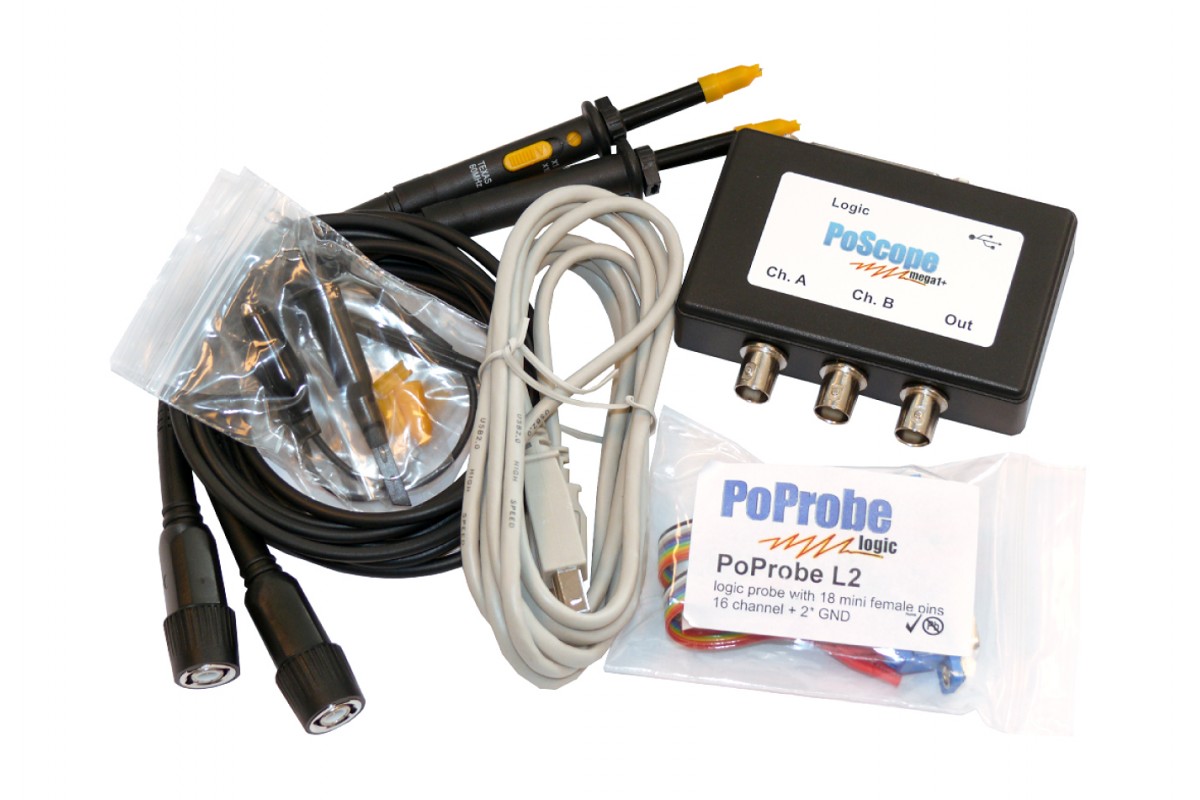
...
Speaking of "multi-frequency...BBS" and other BS's; i kinda highly suspect that there is signal generated with separate frequency and TX-ed to coil.
In this particular example i tend to believe that 7.8kz is basic frequency TX-ed to coil.
All others from the list will be rather harmonics than separate (timed) frequencies, particularly generated by mcu.
Spectrum analyzer will justify or deny this doubt.
Problem is that i don't have any of those BBS (BS) toys at my workbench now.
But i had Explorer II and SE at the time. Similar claims on those models were... you know what!
Also i believe that ML did nothing significantly better and newer since Explorer SE.
Seems they just repacking the same "BS" one after another, relabeling them and reducing the dimensions of enclosures.
Ah yes... rising prices too, of course. Adding jingle&bell or few at each "new" model, just to justify new price.
To be fair; there is no way me to prove these doubts, i can only assume. (but field experiences do add serious weight on such assumptions)
Until we see the source code!
Leave a comment:
-
Have you actually tried using a soundcard on the Equinox output? Most sound cards only handle audio frequencies up to about 24kHz, though they can sample much faster, or claim to sample faster, like at 192ksample/sec.
The maximum Equinox freq we're wanting to see is 39 or 40kHz , and not all cards will even see this frequency, never mind reproduce it in a decent way.Leave a comment:


Leave a comment: