-
Huh that dinosaur 741 even? Thanks, i have bunch of 61,71 and 81, so will check how all they do. Last night i manage to order 356 from Farnell so lets see once they arrive. -
Hi
For LF353 use RC4558 or LM833 or MC33078 these have better sensibility. For LM308 you can use any low noise op amp, I use TL071 because it has less chatter at full sens but TL081 is the most used or LM741.

Leave a comment:
-
Do anyone have experience whit which amplifiers the circuit performs better? I see the alternatives in the BOM list so LF353 vs LF356 and LM308 vs TL071. I'm asking as i have difficulties finding LM 308 and any type of genuine LF.
Thanks.Leave a comment:
-
Huh, just before i solder them i check the polarity and despite all the datasheet showing source in the middle, these one are with the drain in the middle (pin2)?!?!?!?. Good that i verify...Leave a comment:
-
Any FET which cross references to NTE 133(use NTE cross reference online). Can be used. Any general purpose Nchannel FET.
So yes, bf256c can be used.Leave a comment:
-
Thank you. I have one more question. Will BF256B work here instead of BF245C? I've compared them and see only a bit of difference in the ON characteristics, but as on the board is printed exactly BF245C i have some doubt?!?!?Leave a comment:
-
Quick question about the coil. Is there on the market coils for this detector(originalor aftermarket) as I'm overloaded at the moment and prefer to order one online, rather than spending time in experimenting and setting up? Also what about their cost? I google but seems only for the newer Tesoro models there are coils available or most of the time no one sell coil only but complete setup. Thank you.Leave a comment:
-
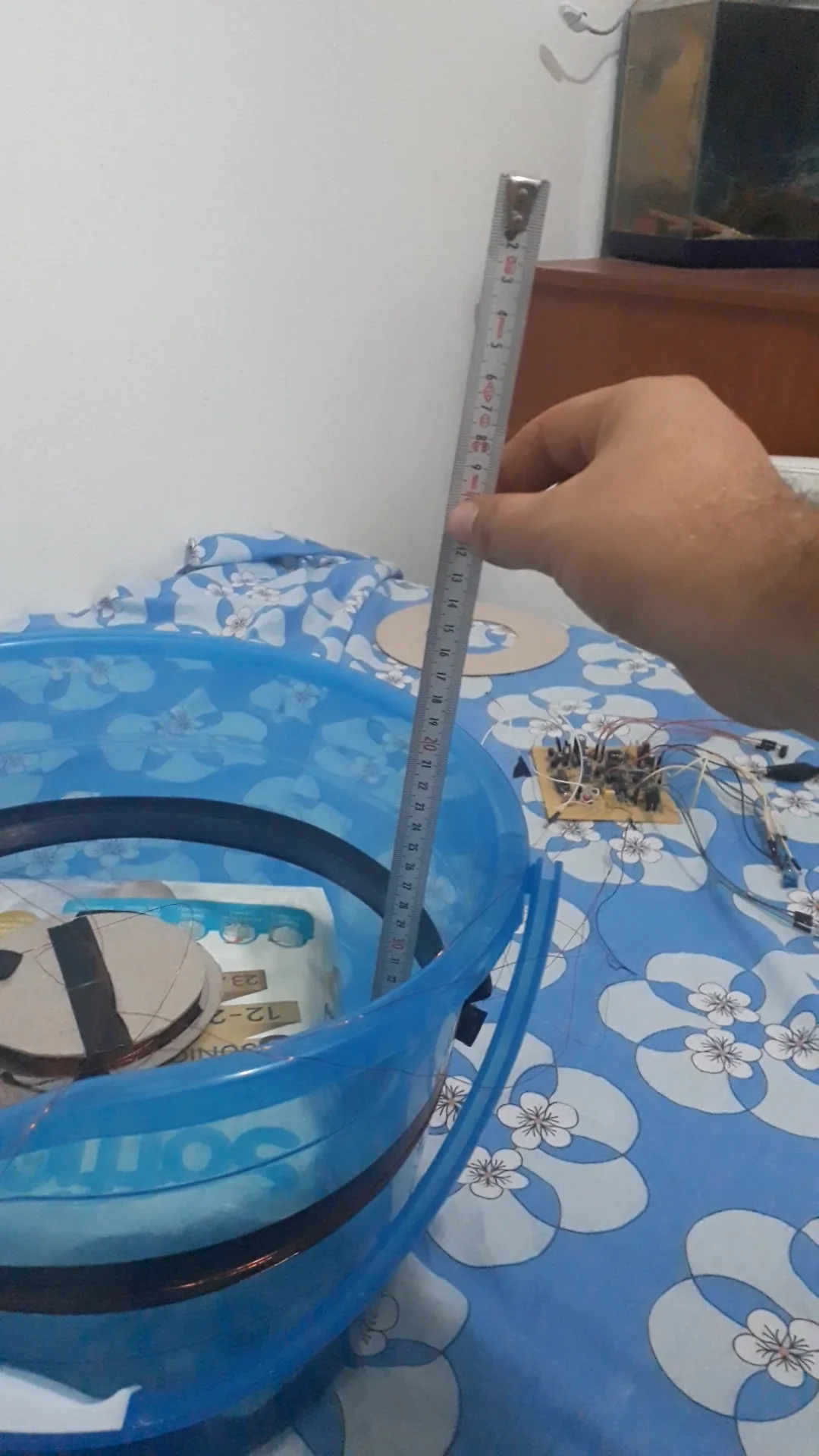
Thx all for helping me.i have build the concentrix coil .first rx and puting it in tx arranged at 13.9khz.after made tx at 14.6khz with buvking coil.in air i can get 1 euro at 29 cm.rx is about 9cm diameter and tx 30 cm.
Thx in advance...
I will think about shielding...but how?Leave a comment:
-
Step 2: use resonance calculator to get value of capacitor needed for 16.1khz resonant frequency.
---
in the arsenal of possibilites we have the especial LC coil tester. it gives resonant frequency directly.
Leave a comment:
-
To measure the resonant frequency of your receiver coil, you must make small coil tester circuit. But it is not necessary. Once calculation is correct, there is no problem.Leave a comment:
-
Step 1: measure Rx coil inductance
Step 2: use resonance calculator to get value of capacitor needed for 16.1khz resonant frequency.
Step 3: choose a capacitor closest below calculated value, adding small values in parallel to get closest to calculated value.
Step 4: proceed to balance coils.Leave a comment:
-
The Rx frequency will be same as tx frequency when it is connected to the circuit.
The 16.1khz is the calculated RESONANT frequency with Rx coil inductance and 15nf cap.
You must measure the Rx inductance and make appropriate calculation of capacitor value for 16.1 khz resonant frequency.( You may add or subtract from 15nf according to the calculation. Remember to measure the ACTUAL inductance of the Rx. Do not trust number of turns.
However, the signal the Rx actually receives when it is working in the circuit will be the same as the TX frequency(14.5khz)Leave a comment:


Leave a comment: