Coiled Coax
I think I have found the answer. I was rummaging around in a box of mixed cables and found this unused coiled electric guitar cable with a mono jack on each end. Having a Fender Strat I was a bit reluctant to cut off the jack and find it was no good; but I did and what I found looks good. Stranded inner, polythene core insulation, lap wound shield and a substantial outer cover. Coils are 15mm mean diameter so nice and neat and very flexible. I worked out the length which came to 4m and measured capacitance 410pf. So 102pf/m. Not bad at all. All that remains is to try it, but I have high hopes.
Eric.
-
Hi Sean,Originally posted by Sean_Goddard View Post
I tried this on some RG58 coax in a temperature controlled electric fan oven with a timer; then into the freezer and out came BINGO coiled cable. It looked very neat except that the coils were all welded together and impossible to separate without tearing. Into the BIN it GO.
I tried another run and dropped the temperature to 90C but it still was too hot. You could separate the coils when cooled but it needed a little help from the end of a screwdriver. Cable now springy but very hard when back to room temperature. Next tried 80C and that seemed OK. Could you have meant 140 deg F.? Or perhaps the Tesoro cable had a different higher temperature material as the outer sheath.
Eric.Leave a comment:
-
All very confusing. With my detectors that have ground cancellation, any target (usually small or low conductivity) that has a faster decay than the ground minerals, will give a rising tone. Any target that has a longer decay than the ground will have a falling tone. This is for a fixed time relationship between all pulses, but any change in that relationship i.e. normal to sensitive can upset that situation and reverse the tones. The SD2100 and 2200 had fixed timing and avoided this confusion.Originally posted by garyq View Post
Copper is used as a standard for conductivity (IACS) at 100% Silver is more at about 108%, with pure gold being about 70%. All other metals and alloys are below that.
Eric.Leave a comment:
-
Hello Eric,Originally posted by Ferric Toes View Post
In regards to your question about he Copper disc and did it give a descending tone then YES it did in both Normal and Sensitive timing.
Btw the Aluminum and Brass discs also gave a descending tone in both timings however the Lead disc gave a rising tone in both timings.
The Ferrous disc gave a rising tone in both timings.
Just for the record both timings also gave a rising tone on US 5c and Australian 5c coins.
However when testing on an Australian 1923 Threepence which contains 92.5% Silver, 7.5% Copper it gave a descending tone in both timings.
But when testing an Australian 1956 Threepence which contains 50% Silver, 40% Copper, 5% Zinc, 5% Nickel then Normal timing gave a rising tone and Sensitive timing gave a descending tone.
Maybe of further interesting when testing the same detector with the 8" mono coil on Gold nuggets of these weights 0.16 gram, 0.44 gram, 1.60 gram, and a 6.76 gram then the Normal timing gave a descending tone on all of them whereas the Sensitive timing gave a rising tone on all of them.
GaryLeave a comment:
-
Sorry I did not pick up on that you only wanted coax cable.Thanks for all those links and there are lots of curly cords but - they are 4 way, 6way, with some shielded, but no coaxial that I could find.Leave a comment:
-
thought i'd chip in..............
I do headphone cable the same way sean suggested,
works well.

temperature wise I guessed it,
warm the cable gently and evenly with a heat gun on low until the cable goes
"shiny",
then its about right.........
then leave on the former you've wrapped it around till cool.
I use an 8mm long wooden dowel,
cable wound and taped at each end,
ends up just like that hard to find headphone curly cable.
Leave a comment:
-
Here is some more information; note step 4 is to turn the wrap inside out to get a tighter spring.
Have a good day,
Chet
Leave a comment:
-
Hi Sean,Originally posted by Sean_Goddard View Post
I'm not sure what the Tesoro search head cable consists of, but the Maplin curly cable that I have is OK for PI detectors? The length of Maplin cable in my picture measured 2uH for the screen and 3uH for the core end to end. Certainly the L varied if I stretched it out or compressed it, about 0.5uH. However, with the forward current down the core and the return current back up the shield the inductance will cancel to a considerable degree. By shorting the screen to core at one end and measuring the inductance at the other, I now got 1.5uH and saw no significant variation if I stretched the cable or compressed it. About 0.01uH.
That particular length (about 1.5m when extended) measured 328.7pf and showed no change when stretched or compressed. The big problem is its high value of capacitance 218pf/m as against 82pf/m for RG58.
Eric.Leave a comment:
-
Thanks for all those links and there are lots of curly cords but - they are 4 way, 6way, with some shielded, but no coaxial that I could find. If my preamp had a balanced input, then some of those may be OK. At the moment I am stuck with unbalanced and need a coaxial type.Originally posted by 6666 View Post
Straight coaxial mic cable is readily available and I once tried some as an alternative to r.f. coax. All seemed to work OK in the workshop but as soon as I took the detector outside, I started to get spurious signals. I subsequently found that the mic cable was microphonic. As I swept the coil from side to side the cable was tapping against the shaft, causing the problem. The cable was Van Damme, so not low end stuff.
The Vallon coiled cable is good because with my belt mounted version of the detector, I can have some on a probe and reach out without having a metre or more dangling all over the place. Also, with a standard coil on a shaft the cable can extend just enough for scanning, and then retreat back into the top shaft when extra cable length is not required.
Eric.Leave a comment:
-
Made my own coiled cable from Belden "Tesoro search head cable".
Wrap it tightly around a 12.5mm copper pipe and bake it at 140 degrees C for 30 mins then remove and place directly in the freezer wait a hour. BINGO coiled cable.
No good for search heads though as the L an C components change as the cable expands and contracts.Leave a comment:
-
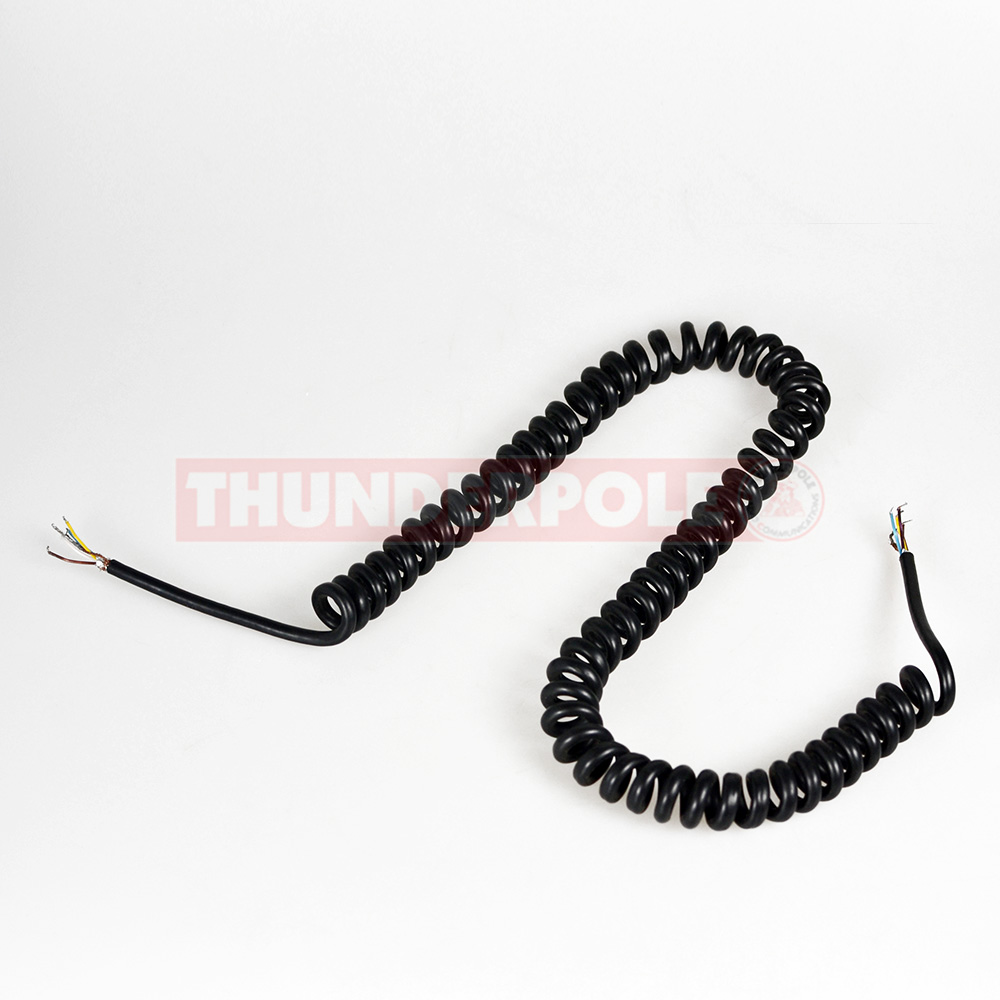
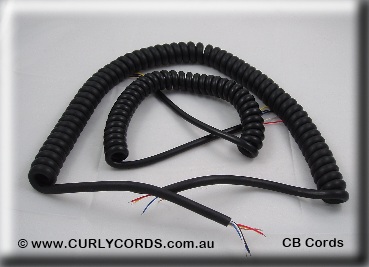
For short lengths try CB or Amateur radio curly cord microphones, just cut the mic and plug off, a bit wastefull but fairly cheap, if you have a disposals store nearby or online check them out for old taxi radios etc. Pilot head sets.If anyone knows of a source of coiled coax or mic cable I would be interested to know.

Leave a comment:
-
Two years ago I bought some coils and shafts that appeared on ebay for the VMH3CS. They were sold as being scrapped because of various faults but I managed to get 3 good coils and some shaft sections that were useable. The coils were not compatible with any electronics that I had, but I hung onto them hoping one day to get a Vallon control unit to try out. Well that day arrived recently and I have been playing with it ever since.Originally posted by KingJL View Post
What I am getting at, is that the coiled cable is from Vallon shafts and is not something that is generally available; which is a shame. I guess they have it specially made so as to fit inside their telescopic shaft with just the right length of coiled section. It is very tight and springy as the picture shows. Diameter is 3mm and the shield is lap wound rather than braid.
Fifteen years ago I used to buy a coiled microphone cable to use on probes. It was available from Maplin in UK but was discontinued and I have not found a source for it since then. It is 4.5mm diameter and neoprene outer, Again lap wound with polythene inner insulation. The main disadvantage was it's higher capacitance compared to coax; perhaps due to the semiconducting layer under the outer lap wound conductor to stop cable noise when moving the mic.
Picture shows Maplin cable at top and two pieces of Vallon cable. The shorter Vallon with two turns is out of the coil swivel so that you can rotate the coil 180 degrees without stressing the cable.
If anyone knows of a source of coiled coax or mic cable I would be interested to know.
Eric.Leave a comment:
-
Eric,
Regarding your post #260, "The Probes are Coming"; If you don't mind, what is the coiled cable you are using for your probes and from where can it be obtained?
Regards,
J L KingLeave a comment:


Leave a comment: