I came across this short text in one post from the past, using search option.
"Look at the outside left ear of your search coil (where the bolt goes through it). You'll see a winding designation stamped into it, i.e. 6B, D5, G, 8B, etc.
D4 and D5 coils were used on the 6000/D and 6/DB detectors ONLY! They cannot be used on any other units.
The D4/D5 coils were available in 8" and 15" only.
B4 and B5 coils were used on the 4/DB and 5000/D detectors only! They cannot be used on any other units.
The B4/B5 coils were available in 8" and 15" only.
6B coils were in use since the "series 2" thru "series 3", Pro units, the Classics, and at present on the Classic I SL and II SL. 6B coils were available in 4",8", 10", and 15".
F coil was made only in a BM256 (Blue Max 10"). This loop is totally interchangeable with all 6B coils above. It was manufactured to give performance to units which use the 6B coil similar to the BM950 coil is use today.
G, HI, 8B coils are known as the (Blue Max) BM350, BM600, BM5.3, BM800, BM7.8, Royal 800, BM950, BM1500. These coils are interchangeable. THESE COILS ARE NOT MADE TO BE USED ON UNITS
WHICH NORMALLY TAKE THE 6B DESIGN! TRYING TO USE THESE COILS IN PLACE OF THE 6B COILS WILL HAVE VARYING RESULTS. Some units may or may not ground balance properly (even if re-adjusted),
but disc settings will be off and target ID's will not be accurate!"
So I looked at the left "ear" of my search head and there is a "B4" or "4B" stamp on it.
So it is specific coil, rare, used only with mentioned models, what misguided me most; sharing the very same outlook and enclosure as many other White's coils too.
So now I know more precise what to look for. Specs for 4B coil it is.
Maybe somebody already posted the specs on the forum, during the years, but it is close to impossible to find it easy, using search option.
...
I am still in constant pain in the area of the lower part of the spine.
I use some anti-inflammatories and massage and it helps temporarily.
An inflamed nerve. A terribly painful thing!
Inflammation "moves" across the nerve.
And it prevents me from thinking, doing, anything...
-
non motion metal detector MD 5008
Leave a comment:
-
Difference between theory and practice (not that bad actually):
P.S.
Sometimes is up to measuring equipment.
Sometimes the S/N affects all.
Bulky wires and hand etched pcb...
So far so good, practice confirms the theory.Leave a comment:
-
Eh, I'm ashamed to say this publicly now; but i found out what the problem is!Originally posted by Qiaozhi View Post
I mixed up the TX wires coming from the connector to the detector!
I connected the TX "live" to the mass and the mass to the "live"... and that's why the TX remained "buried in ground"!
This happens to me often with connectors. I draw a pinout and then misinterpret it, like a reflection in a mirror.
Today I went detail by detail and discovered that error!
I've been "dying in pain" since yesterday, I had a sudden attack of a herniated disc yesterday, and I've been in pain since yesterday until this moment.
It probably also affected my attention.
So to back it up, Proteus is a great simulator and shows the real state.
I put the Tesoro coil back in and this time it works.
"Winning combination" is 34nF+146.8nF+5.18mH = 5.118kHz.
34nF is actually 33nF, 146.8 is 150nF and 5.18mH is a TX coil from Tesoro search head, all parallel.
To get exactly 5.118kHz, which is the closest to specified.
I probably could have adjusted more around the capacity and got 5.13kHz, never mind.
The detector works. On the RX side I didn't add anything from the capacitor, the detection is there,
but it doesn't have the "depth" like the original coil.
Tesoro coil is "wideband" but not that much. It covers 10-12kHz very well.
It is factory balanced for that range.
Then I tried the same method with the Quest coil.
The oscillator worked but there is no sound. Tried various combinations and finally gave up. That coil works at 13kHz, so it is factory balanced.
So... I feel like I'm still at the beginning. However, I'm still not sure what even the approximate inductance of the TX and RX coils are.
But let's say I could wind one DD coil and balance it at 5kHz. It would probably work acceptably.
But "acceptable" is not good enough!
Uploading a video...
...
By the way... do any of you know of a good remedy or method for a herniated disc? Lumbo sciatica?
I suffer from it for a very long time, periodically I have such attacks that it is unbearable!
Don't tell me to go to the doctors! Because official medicine still doesn't have the right answer for this problem.
This has been bothering me for a long time, I've tried everything. Nothing solves the problem in the long run.
It appears suddenly, lasts for a while, and then subsides and disappears. And so on.
There are no obvious reasons, it appears and "attacks" when I'm sitting, lying down, sleeping...
I can feel with my fingers exactly the place on the lower part of the spine where that nerve passes.
When I press with my finger; my head explodes and I see all the stars of the universe!
The worst thing is that I can't breathe because of the pain.
All day I'm looking for a position in which it hurts less. And I worked in those conditions yesterday and today.
No wonder I overlooked such a mistake as a swapped wire on the connector...
My great follies of youth have now caught up with me...
Ok, enough crying, sorry about this, I'm waiting for the video to upload to Youtube so I'll post it here...Leave a comment:
-
According to Proteus; TX is perfect and runs smoothly from a start!??Leave a comment:
-
The schematic suggests the Tx coil is resonant, so it should work when a capacitor is put in parallel to resonate somewhere about the working frequency. I'd say it calls for a high inductance coil, as degeneration in Q11 emitter is 330 Ohm. Somewhere north of 5mH for sure.Leave a comment:
-
OK; I tried various inductances on the TX. Tesoro coil, 5.8mH and 6.17mH... first connected one, tried, nothing, then connected the other,
tried, nothing... then connected TX and RX and got 14.4mH, tried, nothing.
Than I also tried 4.7mH. Nothing.
In all the mentioned tests, I flatly added and subtracted capacities in parallel with the inductances. Nothing.
This is already becoming intriguing and a little worrying!
I'm out of ideas!Leave a comment:
-
I have original Tesoro coil. But i don't want to open the connector and make a mess, it is as good as new and in perfect shape, rare coil nowdays.Originally posted by Carl-NC View Post
And I don't have a "counter-connector" to do the same thing as with the Quest coil... Murphy!
I will have to work something out.
I agree with you, that's the fastest way to "decipher" it.
I have some other coils too, will see...
Good idea!

Leave a comment:
-
Do you have any higher-value plain old inductors? Doesn't need to be a search coil, you could then test to see what values will oscillate.
Another solution is to use a transformer.Leave a comment:
-
Your post #101, PDF, clearly shows parallel TX LC tank.
Since Quest X5 coil is having very low inductance for TX; 0.7mH... the logical conclusion is that the CM5K TX coil probably has a large inductance...
Adding capacitance simply cannot compensate for such a large difference in inductances and the oscillator simply will not start.
...
There are several ways to solve this (to make the CM5K work with the Quest coil)... (not planned for this original detector, but for an eventual diy in the future).
One way is a pcb with a TX oscillator suitable for the Quest coil. And to "bridge" into the existing detector (a faster version for trials, but I don't like it).
And another way is to draw a new pcb, CM5K, but with TX output for the Quest coil (it may be necessary to rework the RX front end as well).
I have already mentioned on several occasions the reason why I insist on the Quest coil.
There are several models, they go with various detectors, they work very well, they are "portable" for various projects.
And here I have the CM5K which is extremely interesting for what I wanted to do (non motion). I really like how it works.
But the main obstacle is its the "plague" of coil, which there is no way I will ever try to make.
So it is very likely that there will be a certain "hybridization"... Now I'm just evaluating which way is easier to go...Leave a comment:
-
Sometimes you really confuse me with those abbreviations! I stop and it takes me a while to figure out what that means!Originally posted by Carl-NC View Post
So, I tried something out of the ordinary... to connect a Quest X5 coil to the CM5000!!!
I calculated the capacitors for 5.13kHz.
And I just tried, I tried both parallel LC and serial LC... adding resistances... connecting this way and that... and it won't work!
The TX oscillator will not even oscillate.
Similar to older Tesoro models; and here there is no sound until the TX oscillates. Although I also connected a frequency meter just in case.
Nope! I didn't do anything! This looks like it's going to be a tough nut to crack!
Because I don't want to open the coil again and risk ruining it. It was already open when it came to me.
So I closed it, glued it with waterproof glue and on top of that with epoxy.
Now "it's like new"!
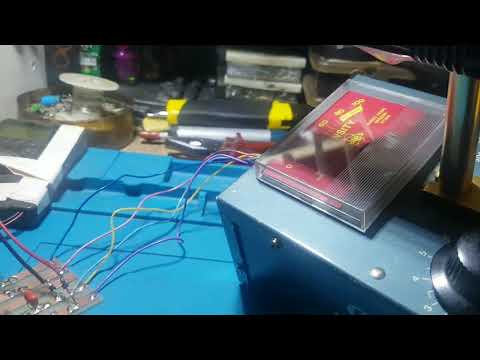
The "testing assembly":
Leave a comment:


Leave a comment: