
Announcement

Collapse
No announcement yet.

Announcement

Collapse
No announcement yet.

AI

Collapse
X
 
  • Filter
  • Time
  • Show
Clear All
new posts

  • #91

    All varieties have their pros and cons.​

    Yes, many decisions and compromises to take.
    The cheapest? Or the best?
    Simple or complicated?
    The purpose of the detector?

    I am experimenting with the butterfly coil variety. DSP would be useful for that. Is the ESP32 good for that?
    3.3 V gives little headroom. Headroom is good for speed and ground compensation. By speed I mean early sampling, like 2 or 3us delay to the first sample. Interesting for separation of magnetic targets and ground.

    Comment


    • #92
      Originally posted by ivconic View Post
      With or without an external ADC, I'm considering both options.
      The internal ADC on the ESP32 is 12 bits which isn't going to give you very serious performance for a dirt-swinger. If you do that, a 3V preamp will be about right. The Bounty Hunter pinpointer uses a 3V preamp that directly drives the 12b internal ADC in an STM32 and it works decently, for a pinpointer. But for a dirt-swinger, you'll want an external ADC with more dynamic range, both in bits and analog swing.

      Comment


      • #93
        Originally posted by Carl-NC View Post

        The internal ADC on the ESP32 is 12 bits which isn't going to give you very serious performance for a dirt-swinger. If you do that, a 3V preamp will be about right. The Bounty Hunter pinpointer uses a 3V preamp that directly drives the 12b internal ADC in an STM32 and it works decently, for a pinpointer. But for a dirt-swinger, you'll want an external ADC with more dynamic range, both in bits and analog swing.
        Not only that, but the linearity across the range is not good. I still use ESP32S which is the weakest, I hear S2 and S3 are with improved linearity.
        They are available in the local market and are not expensive. I plan to pick up a few pieces soon.
        The maximum effective sampling rate is around 83 kHz, which is also a certain limitation.
        As Tony noted; 3v3 gives not enough headroom, but luckily now it's easier to find opamps that work in that range.
        If the ADC is of sufficient resolution; that problem turns out to be not so big.
        Just today I expect 5 pcb from JLPcb, experimental with OPA350, WM8738 and ESP32S on them.
        I am very stubborn about the WM8738. Even the AI ​​suggested to me that it was an ADC tuned for audio only.
        But AI is also superficial and hallucinating like some people!

        When I asked AI why WM isn't "versatile"; it said WM has capacitors blocking the DC component.
        "Okay. Are those capacitors internal, integral to the chip?"
        "No."
        "So why are you hallucinating? Can't I just leave them out?"
        "Oh yes you are right! I apologize!"

        The bottom line is that I'm at such an age that even with double glasses I can't see some small components.
        I adapt the material to my abilities.

        Until recently, it was affordable to order pcb assembly at JLPcb.
        But because of the overall world situation; the prices have gone up so much (first of all the postage) and the packages have started to be late... so that option is now both too expensive and too slow for me.
        If it is different; I would order a microscopic ADC circuit to be "glued" on the pcb and then I wouldn't have any problems.

        WM8738 is a rare ADC that has decent specs and I can work with it myself, solder it and modify the circuit around it.
        96kHz sampling rate is "ridiculously low" by today's standards... but more than enough for my amateur needs.
        With oversampling I can squeeze out a few bits more than 24 bits... but the question is what with them?
        Will the ESP32 be able to apply multiple filters fast enough over that much data and without too much latency and lags...etc.
        I also have some 16-channel ADC circuit that a guy in China sent me, but I put it in a drawer, I can't even see its pins!
        I think 20-24 bits applied to the 3v3 range is already something good enough.
        There is even enough data to compensate for the non-linearity of such an ADC.
        We'll see... time will tell. It all depends on the needs.
        ...
        While waiting the postman...

        One of the more significant problems is that the ESP32S does not have a hardware FPU.
        I hear the EPS32S3 has a hardware FPU but with single precision.
        Reason enough to get it and see the real possibilities.
        The real test is the implementation of 3-4 heavy filters simultaneously.
        Over slow data ESP32S has proved to be good enough so far.

        Comment


        • #94
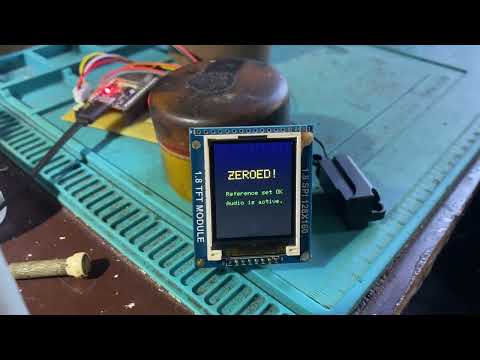
          Here is one of the recent examples of implementing 2 filters simultaneously on "slow" data (Moving Average and One Euro Filter).
          The ESP32S didn't even break a sweat.
          RTC, both cores are in the game.
          Although... that story about ESP32S and multiple cores, RTC... is not quite as idyllic as advertised in the descriptions.
          But that's another story, for another topic.
          Back to the video; note the exceptional stability as well as responsiveness.
          The wider context that is not seen in the video is that the FLC type sensor is surrounded by unseen interference and a bunch of noise.
          FLC works in the 5v range, before introducing the voltage to the ESP32 ADC I put a simple resistor level shifter.
          This is an example with an internal ESP ADC. In the coming period I will try the same with added WM ADC.


          Comment


          • #95
            Pcbs just arrived:

            Click image for larger version

Name:	pcbs.jpg
Views:	141
Size:	406.3 KB
ID:	446058

            Comment


            • #96
              An instructive story: https://www.headphonesty.com/2026/03...n-phono-chips/

              Comment


              • #97
                Or this: https://www.headphonesty.com/2025/09/audiophile-ruins-system-bad-ai-advice/

                Comment


                • #98
                  I overclocked the ESP32 ADC to 20,000,000 samples, on "Direct Memory Access (DMA)", editing the driver.

                  Comment

                  Working...
                  X