Announcement

Collapse
No announcement yet.

LOOKING FOR GOLDSCAN 4 Schematic.

Collapse
X
 
  • Filter
  • Time
  • Show
Clear All
new posts

  • ivconic
    replied
    The horror!
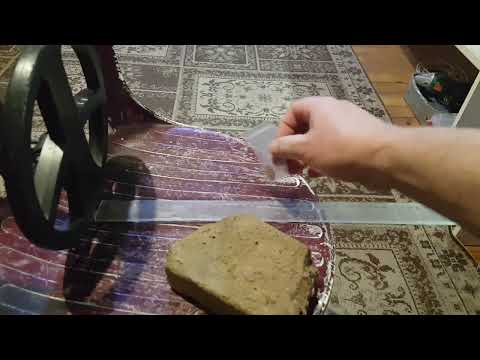
    I hope that now you have a clearer picture of the situation on the grounds that I visit and about which I have written many times.
    To whom the video is not clear; let me clarify a bit...
    The first program on the video was my custom "deep" program at 7.6kHz.
    In that program, the gold coin is detected at a distance of 24 cm.
    But when I put a brick in front of a gold coin; the range drops to 14-15cm and PLUS Deus reports it as a bad target, very unstable and inaccurate response with many errors, very erratic behavior, etc.
    In the second part of the video, I switched to the Fast2 program, my custom program at 18kHz with silencer at 3 and recovery speed at 2.5
    The range to the gold coin dropped drastically to barely 14cm, and when I put a brick in front, it drops further to about 10cm or less. And it also reports the target as bad, as "trash"...
    So much for that.
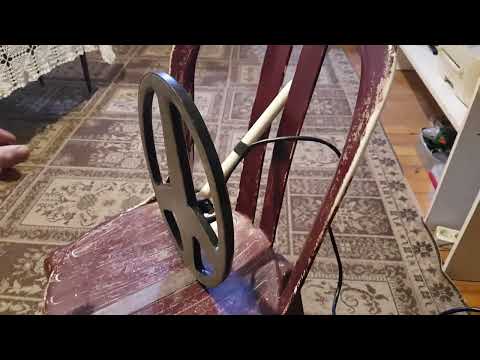
    Deus coil is 22.5cm.


    ​

    Leave a comment:


  • ivconic
    replied

    Leave a comment:


  • ivconic
    replied
    See the Garrett DD coil dimensions in the pictures.
    And the coil for the GS4 is, as I mentioned several times, about 17cm.
    On the "collage" of the picture of Garrett, in the lower right, there is also a picture of a ruler and targets with distances.
    The GS4 achieved IDENTICAL distances on the same targets with a 17cm coil.
    It's just that I didn't show it on the video because it's very inconvenient to place the ruler under the coil.
    And there's no need to be so detailed, I guess you take my word for it, I don't have the slightest reason to make anything up and exaggerate.
    On the GS4, the delay is still ≥10uS. I still haven't tweaked anything since the last time.
    GS4 is in GND mode, GND is set to that 5th century brick. The same is the case with Garrett.
    This is encouraging!
    Now I have some kind of reference.
    Ok, I will agree that the Garrett Infinium is not the most adequate reference, it would be much better if I had some Minelab SD, GP or GPX to compare it to.
    But unfortunately, I was not able to manage in this short time.
    ​

    Leave a comment:


  • ivconic
    replied

    Leave a comment:


  • ivconic
    replied

    Leave a comment:


  • ivconic
    replied
    For the purposes of any comparison; I borrowed a Garrett Infinium LS from a friend.

    Click image for larger version

Name:	Garrett.jpg
Views:	571
Size:	577.0 KB
ID:	421290​

    Leave a comment:


  • ivconic
    replied
    Click image for larger version

Name:	Mete_vaga.jpg
Views:	541
Size:	664.2 KB
ID:	421288​

    Leave a comment:


  • ivconic
    replied
    You haven't read my posts carefully (if at all) from the beginning.
    That's not my goal, big coil and big depths... for that kind of thing I have Pulse Star 2.
    My goal is good sensitivity on the smallest targets and good GEB.
    Of course, the GS4 can also be set to work "slowly" and to work with a coil of 3x3 meters and larger!
    I don't care one bit.
    ​

    Leave a comment:


  • Xtrem
    replied

    This is GS4 with very large coil, you can see that in the AM mode it has more sensivity.

    Leave a comment:


  • Jose
    replied
    I once tried to vary the width of the samples on the GS4 to more than 20 us, but it doesn't work, apparently the integrator stops working or I made some mistake, I don't know.
    I also tried to reduce the time between both channels in order to obtain greater sensitivity when using the GB. The result is an unpleasant sound with some metals. In practice it can be reduced by about 5 us with some improvement in sensitivity.​

    Leave a comment:


  • Detectorist#1
    replied
    Hi Krzysztof,

    OK, ATMega328BP is 8b uP - sorry- , but this not change the difficult of discrimination in PI MD.

    Leave a comment:


  • ivconic
    replied
    Got it!
    More or less I thought so.
    But it's always better to get confirmation from someone in the know.
    ​

    Leave a comment:


  • Carl-NC
    replied
    You should look at the preamp output settling to see if there is any room for decreasing the sample delay. Or, if you build a fast coil, then you will want to decrease the delay. IMO, increasing the delay above 15us or so has no value so don't worry about losing the high delay values.

    Hunting high conductor coins is a completely different setup than hunting small nuggets. You want an early sample delay, but a much wider sample width helps a lot. So does a higher TX width. Suggestion: start out by doing air tests with a variety of coins. For this, you don't need GB so run it in AM mode. Focus on TX width, frequency, and sample width (you should quickly see that a minimum sample delay is always best) and see what is optimum for the different coins. You will obviously need to compromise, or decide that you need to hunt the same ground in more than one mode (nugget hunters do this all the time). One you figure this out, enable GB and figure out the best Gnd delay & width for the least obnoxious target hole.

    Leave a comment:


  • ivconic
    replied
    Originally posted by Carl-NC View Post
    That's much better, probably OK to leave it there for now.
    What do you think; does it make any sense with these hardware to set the delay adjustment range something below 10uS?
    As for other tweaking; all that's left is to separate TGT from GND in terms of pulse width and set GND a little wider.
    Is it a matter of experiment or do you have any concrete recommendations regarding the pulse width for TGT and GND?
    ​

    Leave a comment:


  • Carl-NC
    replied
    3 channels will give you 3 sample points on the curve, which does 2 things. First, it gives you 2 slopes so you can ground balance without ending up with a target hole. Second, it lets you consider non-linear responses like iron, which is not strictly exponential, and perhaps can be used for ferrous ID. However, non-ferrous targets are only linear after 1 tau of decay, so even non-ferrous targets (especially high conductors) will appear non-linear in the normal region of sampling.

    Leave a comment:

Working...
X