Announcement

Collapse
No announcement yet.

felezjoo PI(the best pulse induction metal detector that I made until now)

Collapse
X
 
  • Filter
  • Time
  • Show
Clear All
new posts

  • ivconic
    replied
    Originally posted by Qiaozhi View Post
    Yes, that's very interesting. As far as I can tell from your videos (especially the last one) the pulse width doesn't seem to change, but there are discrete gaps between the pulse chains. I'm not sure whether this has any significance, or simply that the TX oscillator goes off while the micro is processing data.

    That's why you hear audio response also; i tested to see how it will behave with detection signal from coil too.
    I might be wrong but it's like there is a difference in pattern?
    Things are moving fast and my hands are occupied holding the "wires" and camera...
    Without coil there is no tx, but i didn't recorded that.
    Obviously it's not just any dull tx.. yet it's not neither the ML waveform...
    Right now i can't use both channels, don't have two probes yet.
    Ordered them and awaiting to arrive...

    Leave a comment:


  • Qiaozhi
    replied
    Yes, that's very interesting. As far as I can tell from your videos (especially the last one) the pulse width doesn't seem to change, but there are discrete gaps between the pulse chains. I'm not sure whether this has any significance, or simply that the TX oscillator goes off while the micro is processing data.

    Leave a comment:


  • ivconic
    replied
    Uploading is annoying...
    You'll notice that i've changed sampling frequency few times...


    Leave a comment:


  • ivconic
    replied
    I just did it and you'll be amazed to see it.
    Just waiting upload to Youtube...

    Leave a comment:


  • ivconic
    replied
    Originally posted by Qiaozhi View Post
    Just a quick thought ...
    Has anyone probed the TX waveform with an oscilloscope? In an early post in this thread koohyar made a statement that the Felezjoo works in the same way as the Minelab GPX. I'm wondering whether this implies that the Atmega micro is automatically varying the TX pulse width. If someone could look at pin 16 of the Atmega, that would show us what the TX oscillator waveform looks like.

    I may do that.
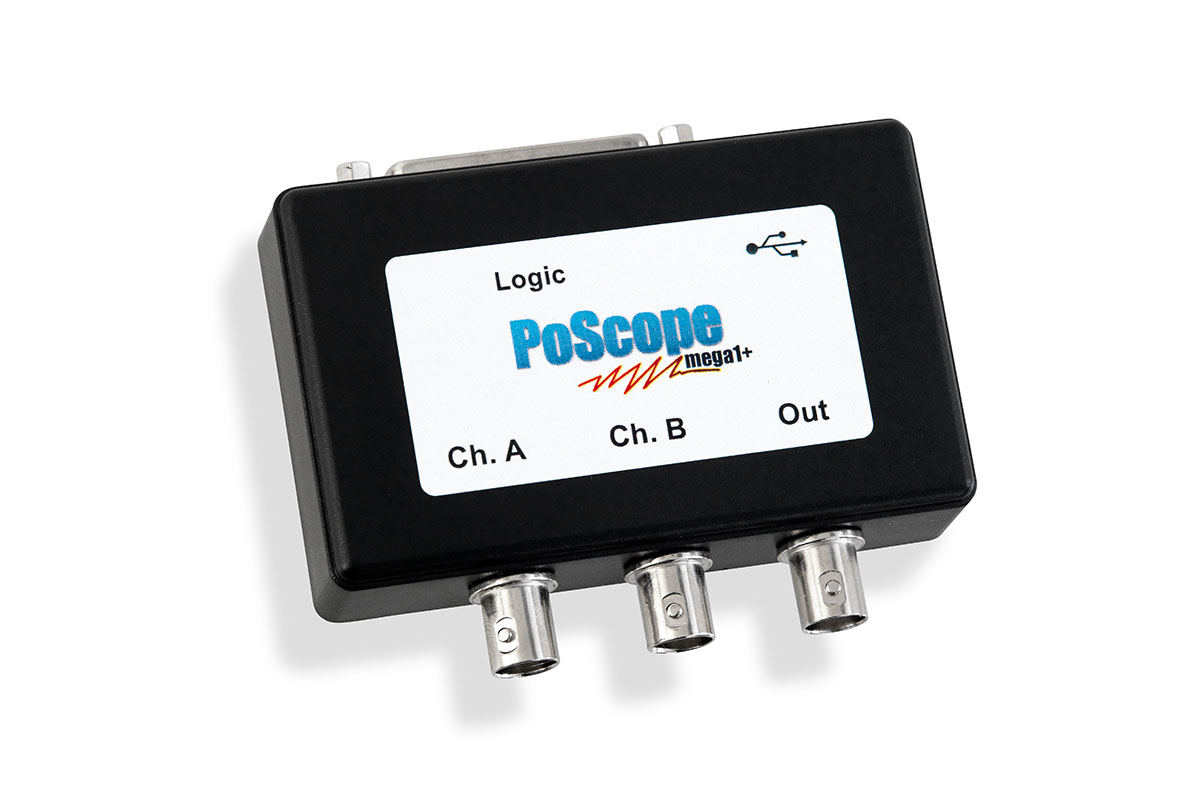
    Recently i got this as a gift from a friend:
    PoScope Mega1 is worlds lowest power consumption portable USB mixed signal oscilloscope. It draws only 60mA current from USB.

    Still adapting on it.
    Neat little thing!

    Leave a comment:


  • Qiaozhi
    replied
    Just a quick thought ...
    Has anyone probed the TX waveform with an oscilloscope? In an early post in this thread koohyar made a statement that the Felezjoo works in the same way as the Minelab GPX. I'm wondering whether this implies that the Atmega micro is automatically varying the TX pulse width. If someone could look at pin 16 of the Atmega, that would show us what the TX oscillator waveform looks like.

    Leave a comment:


  • ivconic
    replied
    Originally posted by Qiaozhi View Post

    Actually I said the preamp in the Felezjoo was slow, not the opamp.
    That reasoning was based on the preamp being configured for a 2000x gain. However (in this design) the LF357 offsets this disadvantage by having a much larger GBP and faster slew rate than most other opamps.


    The MPP is a finished and proven project. You can easily see that by reading the MPP threads, especially the Completed Projects section. This section only represents a small number of the MPPs that have been successfully built and used in the field. This is because not everyone wants to stand up and be counted, or to be in the rogue's gallery.


    As already mentioned, the MPP is not an unfinished project. Please read the MPP threads ->
    Minipulse Plus
    If the project was an unfinished piece of work, then Silverdog would not have it on his website -> www.silverdog.co.uk


    The reality is that I could easily add a micro to the MPP, and put in lots of bells and whistles, but that was never the intention. The purpose of the project was to update and modify the original Pulse Technology MiniPulse (an Eric Foster design) and give it a new lease of life. It was purposely kept in its analog format to make it an easy project to build. It still has the fastest preamp of all the other designs, including the Felezjoo. Anyway, this thread is not about the MPP, which has its own dedicated thread.
    To cut the story and stop with further unnecessary debates and to focus only on topic here; i shall say only this:
    at first i liked MPP idea much. That's why i decide to make it. And it works from the very first switching ON.
    But audio was awful and "depths" was not what i expected. There could be many reasons for that, on the first place i could done something wrong. Than i saw it grows into "versions" and "versions" and in time i lost interest and focus for it.
    As i previously somewhere wrote; i am not saying those are bad. I am only trying to make the difference between all those mentioned so far and this one.
    Because this one is "digital". Not just plain "bells&whistles" but indeed digital. Minimalism in components and all the processing done by MCU. That's not what we may call
    plain "bells&whistles".
    This is what makes it special and much different than other diy projects we've seen here so far. That's what makes it "category" on it's own here.
    And that's why i think is
    necessary to pay especial attention on it and give it a chance.
    Otherwise... apart from that; all my respect also goes equally to all other honest diy attempts and ideas too.


    Leave a comment:


  • liudengyuan
    replied
    qiaozhi, hello, please tell delta pulse and pulse hammer their respective advantages, which detection range farther

    Leave a comment:


  • Qiaozhi
    replied
    Originally posted by ivconic View Post
    Now... that's more constructive approach!
    It should be good to look up for more possible substitutions too... if any.
    Because author himself also pointed out on delicacy about LF357.
    Seems he adapted the code especially relying on LF357 features.. which is good and bad in same time.
    Good because he pulled out the maximum from it; bad because this made whole design more delicate.
    Yes, I agree.

    Leave a comment:


  • ivconic
    replied
    Originally posted by Qiaozhi View Post
    ...
    So ... I've watched the video, and it certainly appears to be able to detect the 5mm x 5mm aluminium square consistently from about 2".
    This is a much better test than the signal diode. By the way, I referred to the signal diode as a low conductivity target because of its small size. For example, in order of highest conductivity, silver comes first, followed by copper, gold and aluminium. Yet we often refer to small gold nuggets as a low conductivity target. This is basically due to the size of the target, and the fact that the gold is mixed in with other ores. An object becomes a low conductivity target when it cannot sustain eddy currents for more than a few micro-seconds..
    I think part of the explanation for the better-than-expected response is the LF357 opamp. This opamp has much superior performance in this application than the usual NE5534. Unfortunately the LF357 is now declared obsolete and not recommended for new product designs, and there is no direct equivalent. The closest one appears to the AD745. The problem in obtaining this component is also made more difficult by the number of fake devices on the market. Let's keep investigating, and we'll get to the bottom of this eventually.
    Now... that's more constructive approach!
    It should be good to look up for more possible substitutions too... if any.
    Because author himself also pointed out on delicacy about LF357.
    Seems he adapted the code especially relying on LF357 features.. which is good and bad in same time.
    Good because he pulled out the maximum from it; bad because this made whole design more delicate.

    Leave a comment:


  • Qiaozhi
    replied
    Originally posted by ivconic View Post
    Your "chronology" now extends to; "LF357 was considered slow previously and now is fast" !!!

    Actually I said the preamp in the Felezjoo was slow, not the opamp.
    That reasoning was based on the preamp being configured for a 2000x gain. However (in this design) the LF357 offsets this disadvantage by having a much larger GBP and faster slew rate than most other opamps.

    Originally posted by ivconic View Post
    Can't you recall that i also made MPP and recorded a video on it? It is not "well proven" for me because i didn't liked it.
    And why? Because it was never finished project.
    The MPP is a finished and proven project. You can easily see that by reading the MPP threads, especially the Completed Projects section. This section only represents a small number of the MPPs that have been successfully built and used in the field. This is because not everyone wants to stand up and be counted, or to be in the rogue's gallery.

    Originally posted by ivconic View Post
    You offered it here as unfinished thing so to have enough "material" to talk about in next 20 years, so it seems.
    As already mentioned, the MPP is not an unfinished project. Please read the MPP threads ->
    Minipulse Plus
    If the project was an unfinished piece of work, then Silverdog would not have it on his website -> www.silverdog.co.uk

    Originally posted by ivconic View Post
    Be fair and don't put in the same line analogue projects like MPP with this one, this one is digital, having mcu & LCD, very rich and nice digital audio, lot of additional informations on the display, lot of adjustments and options.
    And for what's most important; this one is working much better than MPP.
    The reality is that I could easily add a micro to the MPP, and put in lots of bells and whistles, but that was never the intention. The purpose of the project was to update and modify the original Pulse Technology MiniPulse (an Eric Foster design) and give it a new lease of life. It was purposely kept in its analog format to make it an easy project to build. It still has the fastest preamp of all the other designs, including the Felezjoo. Anyway, this thread is not about the MPP, which has its own dedicated thread.

    Leave a comment:


  • Qiaozhi
    replied
    Originally posted by jladre View Post
    Hahaha!..please don't used your power just for that little things it unfair.
    That wasn't a threat. I hope you didn't think it was one. My meaning was just that you mustn't take any questioning here too seriously, as occasionally some people get emotional, and the discussion turns into an ill-tempered row. I don't think either of us want that to happen. At least that was never my intention.

    Originally posted by jladre View Post
    I just a hobbyst that fun on building md.. Is not that obvious that im not related of the designer of this md? If it could happen i will never keep on asking the full hex code.
    Please don't take my interest in this project as "bashing".
    It should be possible to have a grown-up technical discussion without the emotional responses. I know you haven't done that, which is good. Also, I was only asking about whether you knew the designer, or not, because this might make it easier to obtain some more indepth information. Personally I still have my doubts about the so-called iron discrimination. Not whether I'm really seeing it reject iron in a video, but more to do with whether the discrimination is based on target conductivity. I suspect this must be the case, due to the simplicity of the hardware, and the fact that it uses a mono coil. It's probably better that you don't personally know the designer, because this makes you more likely to be an independent and unbiased researcher.

    So ... I've watched the video, and it certainly appears to be able to detect the 5mm x 5mm aluminium square consistently from about 2".
    This is a much better test than the signal diode. By the way, I referred to the signal diode as a low conductivity target because of its small size. For example, in order of highest conductivity, silver comes first, followed by copper, gold and aluminium. Yet we often refer to small gold nuggets as a low conductivity target. This is basically due to the size of the target, and the fact that the gold is mixed in with other ores. An object becomes a low conductivity target when it cannot sustain eddy currents for more than a few micro-seconds..

    I think part of the explanation for the better-than-expected response is the LF357 opamp. This opamp has much superior performance in this application than the usual NE5534. Unfortunately the LF357 is now declared obsolete and not recommended for new product designs, and there is no direct equivalent. The closest one appears to the AD745. The problem in obtaining this component is also made more difficult by the number of fake devices on the market. Let's keep investigating, and we'll get to the bottom of this eventually.

    Leave a comment:


  • ivconic
    replied
    Envy?
    Why would i feel envy about this?
    There is no reason!?
    In fact; i could be envy only on author of FelezJooPI, because he did good job, not me.
    (At some point i am!)
    ...
    Your "chronology" now extends to; "LF357 was considered slow previously and now is fast" !!!
    And you may keep on going like this to eternity... instead i would like to see you built this detector and have it materialized.
    Than you would be able to place here correct remarks and analyze.
    Forget the simulator and simulations. Take the soldering iron and do something. (Beware not to burn your fingers with it!)
    Somewhere you said "well proven"... well, this one is also "well proven" to us who made it and make it work nice.
    Can't you recall that i also made MPP and recorded a video on it? It is not "well proven" for me because i didn't liked it.
    And why? Because it was never finished project. You offered it here as unfinished thing so to have enough "material" to talk about in next 20 years, so it seems.
    Be fair and don't put in the same line analogue projects like MPP with this one, this one is digital, having mcu & LCD, very rich and nice digital audio, lot of additional informations on the display, lot of adjustments and options.
    And for what's most important; this one is working much better than MPP. In any aspect.
    Only valuable info from all your posts on this topic so far is your elaboration on possible LF357 substitute. I salute that. That's the only thing that may contribute here.
    And for the end; i have nothing especially against you personally. I rise emotions only when i see unfair and unequal treatment towards the projects and between people here.
    Otherwise i really don't mind.

    P.S.
    LF357 as i recall was used in majority of high class PI detectors. For example it is used also in Pulse Star II and Pulse Star II Pro.
    LF357 is still actual, not that hard to obtain, price is 1.3 euros here in local shops, and much lower at some shops abroad.
    Only problem around it may be the
    reasonable suspicion on "rebranded" LF357 series , which are floating on some markets.

    Leave a comment:


  • jladre
    replied
    Originally posted by Qiaozhi View Post
    I'm pleased you accept critics, as you wouldn't last very long here if that wasn't the case.
    By the way .. are you the designer, or perhaps a friend of the designer?

    It's getting late here now, so I'll watch the video tomorrow, and most likely ask more questions after that.
    And, hopefully, Ivconic won't jump down my throat again in a fit of emotion.
    Hahaha!..please don't used your power just for that little things it unfair.

    I just a hobbyst that fun on building md.. Is not that obvious that im not related of the designer of this md? If it could happen i will never keep on asking the full hex code.

    Leave a comment:


  • Qiaozhi
    replied
    Originally posted by jladre View Post
    Her is a short video on aluminum detection. A 5x6 mm aluminum foil folded into two is detectable at 3". A 1x1" aluminum sheet 50% thicker than soda can is detectable at 14-15". Note: it is just an air test. And it is all metal mode. Critics is accepted anyway thats not my problem
    NOTE: i dont and never said that 1n4148 diode is a low conductive target. What i say is tiny target.https://m.youtube.com/watch?v=N3EeKpyZIEo
    I'm pleased you accept critics, as you wouldn't last very long here if that wasn't the case.
    By the way .. are you the designer, or perhaps a friend of the designer?

    It's getting late here now, so I'll watch the video tomorrow, and most likely ask more questions after that.
    And, hopefully, Ivconic won't jump down my throat again in a fit of emotion.

    Leave a comment:

Working...
X