

 Tweet
Tweet
Originally posted by kt315
View Post
-
Help, the benefits of police. -
Check with KT315. Ask him what fuse value he used for the Delta Pulse.Originally posted by Infamy View PostComment
-
4-5A is ok.Comment
-
take strong attention you must connect terminal blocs TOGETHER before soldering. beginners do not understand the electronics. four lessons cooker.Originally posted by Infamy View Post
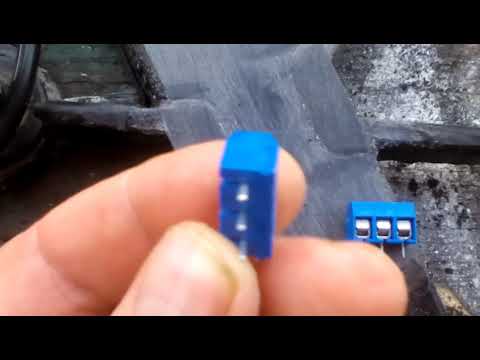
Comment
-
-
I'd say so, full on fummer too.Originally posted by GeoMax View Post
I should have a small tripod to mount my video camera on this week.
Thinking of doing a comparison between plain straight batteries and the version I posted a photo of.
On an Oscope what should I set it up for to best show the differences, as I already said I have not touched it in 5 years and
then I was looking at halo images which I'm likely to never repeat even if I could remember what it was all about (hidden in the back of a Philips CD manual).
Then its voltage readings on the board and stage 2.
The fuse for in the field working Lipo battery version.
The S505-4-R is a 4A/250VAC time delay anti-surge HRC Fuse with ceramic tube and nickel-plated brass end cap. This S505-series fuse features high break capacity. Designed to IEC 60127-2. Time-delay performance ideal for inductive circuits. https://fr.farnell.com/en-FR/eaton-b...0mm/dp/1123120Comment
-
Been trying to understand the variety of capacitors that are used in DP builds specifically C16, C18, C22 100nf & C25 220nf
Parts list says to use polyester film but I came across an EEVBLOG video where they are not recommended for pulse applications and polypropylene should be used instead.
Any comments?
@ 7.04 - 8.11
https://www.youtube.com/watch?v=xlvqUts9H9c
Having to reorder my polypropylene 100nf caps as sellers spacing description for legs was wrong. I do have a bag of jelly bean caps 100nf any disadvantages to using these?
But these are the polyester ones but few people use in their builds?
And yellow tower blocks I see in photographs of most builds are polypropylene?
But what is with large and small yellow tower blocks of the same value must be some props and cons?Comment
-
The Delta Pulse as a whole is a "pulse application" but the capacitors C16, 18,22 and 25 are not critical.Originally posted by Infamy View Post
Comment
-
Larger mean able to handle higher voltages means lower ESR.Originally posted by GeoMax View Post
Most examples look to be going polypropylene just in case there's an advantage even if it is not critical.
So large polypropylene just incase, thanks.
PS from the looks of the pic examples there seem to be some difficulty soldering those 22uf caps on the back, several bad joints on magnification.
I followed an example on youtube which worked with slight modification.
https://www.youtube.com/shorts/CSAb0dtI85s
PPS What is critical?
that is question.
What components beyond those specified in the parts list should one pay special attention to?Comment
-
Hi
In other words, “…are not critical” means something like, you can use whatever you have on hand.Comment
-
But it's notOriginally posted by GeoMax View Post
What IS critical?
I know the black rectangular 8 and 14 legged creatures are and some listed resistors, is there anything else to add to this; fuse is sorted.Comment
-
1. noone did keep DP original board in hands.
2. there is just one schematic. nothing more. later got still drawhand sch and a schematic of XR71.
3. noone had given full part list with the recommendations
4. no data on DP coils, full luck of the info.
5. using Trash Technology is to use that you have in the garbage.
6. you do not do Star War ship. do not overload your mind by the useless load.Comment
-
So many ideas for so old scheme! Only original idea of this project is the waiting for voltage reducing of the RX signal after TX pulse for start of the "first delay". This allows to use coils with different parameters ( as in SD2000 MD from Minelab) and different volume of the RX signals depending of the target's size.Comment
-
Those caps aren't used with pulse signals, they are DC integrating caps. Generally you would be concerned with leakage and microphonics in which case film caps are better than ceramic caps. Reality is, you won't see much difference and can use whatever you have on hand. And if the lead spacing doesn't fit the holes, bend the leads.Originally posted by Infamy View Post
For the rest of the circuit, there really aren't any critical components that need special attention. Generally, the preamp opamp needs good bandwidth and the integrating opamps need low bias current. Sometimes there are limitations on what chip tech you can use; for examples, a bipolar 555 vs a CMOS 555, or a 4000 logic chip vs a 74HC4000 logic chip. Otherwise, there is a lot of leeway in most of these circuits.
Comment
-
Thanks Carl, but I'll skip the leg bending.Originally posted by Carl-NC View Post
(“My family and I have known for years that there are costs to standing up to Donald Trump, but we couldn’t imagine ourselves living any other way. We will not live on our knees, and you shouldn’t either,” Comey said.)
https://www.theguardian.com/us-news/...tor-indictment
I'd say its statements like those that Presidential wonabees can only dream of.Comment

Comment