 Tweet
Tweet
You are absolutely right. It is very difficult to learn a language in its technical form. Today, after so many years, I saw where Sokobanja is. I saw that you are close to us. We are very close people with a common past. Unfortunately, often tragic. Bulgarians love their neighbors despite this. I have a health problem. I would make a new circuit board. I did not expect that this construction would arouse much interest. I wish you success
-
You are absolutely right. It is very difficult to learn a language in its technical form. Today, after so many years, I saw where Sokobanja is. I saw that you are close to us. We are very close people with a common past. Unfortunately, often tragic. Bulgarians love their neighbors despite this. I have a health problem. I would make a new circuit board. I did not expect that this construction would arouse much interest. I wish you success -
Yes, I am 80 km from the border. 120 km to Vidin, I went there often to the flea market!
A good analog design will always be relevant if it provides something interesting.
Feel free to believe me; there is hardly a brand and model of metal detector that is worthy of attention; without having passed through my hands until now.
I've been at this for 40 years.
The new digital "MF" detectors are ok, but like many before them they have a lot of flaws.
Flaws are not expressed in the same way everywhere on the planet.
I've been searching all my life for a detector that will give more quality to my soils that I have around me.
That's why whenever I see something interesting; I am very excited to try it on my soils.
Comment
-
If I continue the story in this manner; maybe i will provoke some good engineers here on the forum.
But there is an old Serbian saying: "not everything that flies is eaten".
In this case; anything that looks really good on the design table or in the simulator; it does not necessarily prove good in real conditions on some soils.
Here, I first have in mind the progress of science and technology and the very arrogant certainty of some top engineers, from large companies, to whom their designs in ideal mathematical conditions seem perfect.
In real life, such "perfect" designs here on my local soils mostly turn out to be little babies without clean diapers!
Specifically, to be even more direct; here I am thinking first of Minelab Manticore and XP Deus 2. Without ten packs of "diapers" I would never go out on serious quests with them again.

Comment
-
-
Excellent Pechkata, that encourages me to build it. I'll have to make time for the PCB. Did you have any problems building it?Comment
-
Hello Pechkata,
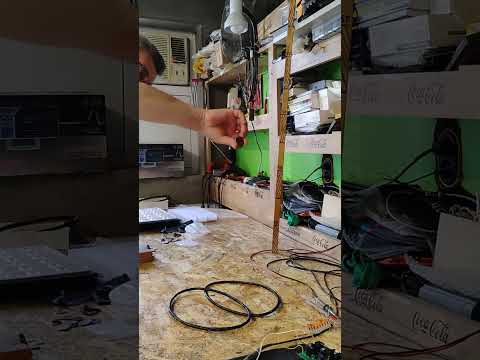
Is the detector board in the video you posted based on the Whites AF108 mine detector? Or what circuit is the base?Comment
-
"The great Bulgarian inventors" are characterized by measuring whose organs are larger. I don't want to deal with that. Even in the air, this thing has no depth.Comment
-
Comment
-
Every amateur work is worthy of respect.
But I think someone mixed up the topics here.
We are talking about Sasho's VLF-I/B slow motion here.
PI detectors should not be confused with this thread.
Although I'm tempted to say that my Barracuda does a lot better than that PI in the video.
But let's not start such stories here, so as not to spoil this interesting topic about Sasho's detector.
There are too many topics about PI detectors on the forum anyway.

P.S.
If you want good PI insight, get ITMD3 and read it multiple times.
Carl did a phenomenal job there.
And at the end he gave a couple of very good PI projects.
Comment
-
Back to the topic.
Sasho, I gave your schematic to my younger (and much smarter) colleague from China and asked him to draw me a pcb according to the given dimensions.
Until I met him a couple of years ago; I thought I was a very fast and good pcbs designer.
But then I saw that he was better and much faster. So I'll wait for him to draw it.
Comment
-
I repair lasers and robots and I have no problem making a digital detector. I think analog detectors work better. I hope you are satisfied. I hope you can send me some Chinese boards for free. I am a poor man with only one pension...
Comment
-
When a colleague from China draws a pcb; will send me the gerber files.
Then I will order the manufacture of 5 pieces (minimum is 5) in JLPCB.
When they arrive; I can send you one or two.
This is not a problem, it is important that the detector works well.

Comment
-
Almost all ground balance detectors operate with a phase-shifted ground balance signal. The second channel determines the type. The detector emits a signal when the two signals match. But the constantly changing signal in both channels leads to errors. That is why a perfectly working detector in the air misses a signal in the ground that an old "C-scope" always finds. This is about real use with movement, not a test on a known buried object.
Comment
-
And now one question! Ha, ha, ha!
I stopped DIY coils a long time ago!
I think I stopped when I was doing IGSL (the successor to TGSL).
Since then, I rarely build detectors, mostly for my own needs and as a hobby.
And instead of making coils; I always look to use an original coil.
Currently in my collection I have a spare new coil for Fisher 1266 and 2 coils for Fisher CZ6.
However, I see that your coils have the same number of windings, the difference is in the thickness of the wire.
Do you have specific data on resistance and inductance?
Math estimates that the TX coil is around 13-14 ohms and 0.53-0.55mH and the RX coil is around 35-36 ohms and same inductance to the TX coil.
Have you tried a detector with a different ratio?Comment
-
Ah yes!
In the meantime, you indirectly answered my question.
Just by mentioning "CScope" you explained things to me!
Comment


Comment