Announcement

Collapse
No announcement yet.

Announcement

Collapse
No announcement yet.

Induction Balance Stuff - Single/Multi Frequency Response, GB, Disc, Measurements, Ideas, Fun, etc.

Collapse
X
 
  • Filter
  • Time
  • Show
Clear All
new posts

  • #31
    Hi all,

    this is the preliminary detector controller for my sound card test interface for multi-frequency IB-system measurements soon. Left and right sound card output channels control the pulse frequency and the switch-on/off timing of the mosfet defined by phase shifting one of the output channels. They are pure sine waves. Pulse duty cycle is adjustable between 0.5 and almost 1.0 (allways on). If both clock signals are not present or zero, the clock detectors should switch off the mosfet to avoid excessive power draining through the TX coil. Some hysteresis is required to increase the noise immunity and wild switchings. The mosfet switches off hard (fast) and switches on soft (slow). This is perfect for us and the clock detectors are implemented as NOR logic and inverted then for the mosfet-driver ( NOT NOR = OR logic). Analog part needs power supply filtering (R1, C2). Choke L1 keeps the excessive current flow out of the transmitter away from the battery source and analog part. But it passes small amount of current to compensate the whole transmitter losses.

    This is the whole transmitter. What about receiver? Do we need a receiver? No, we can plug an RX-coil with protection diodes to the input of the sound card. The other input will be used to process the TX reference signal. That's it to start with soon.

    Schematics:
    Click image for larger version  Name:	TEM2-Transmitter-Controller1.png Views:	0 Size:	97.2 KB ID:	444399
    Aziz

    Comment


    • #32
      Hi all,

      just for your convenience: I have added protection diodes to the RX-coil and the whole zipped LTSpice files so you can play with it.
      Attached Files

      Comment


      • #33
        Hi all,

        the USB EMI filter kit came today. It does not help anything. It shifts the USB power noise spectrum a bit to the left. No attenuation of the power noise visible.
        Maybe the sound card front-end amplifiers do resonate? Unstable amplifiers? Bad design? Yep, fire the engineers!

        The LCR inductance change measurements will delay until I get my external powered USB HUB (expecting it next week). I have to prepare for the measurement setup too. I might be restricted to measurements up to 48 kHz with my sound card due to known issues. Pity, above 50 kHz the skin effect is clearly visible.

        Well, I could build the sound card interface in the mean time. If I can find my parts.
        Aziz

        Comment


        • #34
          Hey Aziz .. one side of your TX coil is all spiky and the other side is bouncing around like a yo-yo. Unless you integrate all the electronics in the coil head you cant really have that its not balanced.
          Ideally should have bipolar with one end grounded or symmetrical fully balanced.

          Click image for larger version

Name:	image.png
Views:	268
Size:	98.3 KB
ID:	444455

          Comment


          • #35
            Hi Paul,

            I know, the transmitter isn't perfect. But it follows the KISS principle with minimum amount of parts and ease.
            That's not important to make some new measurements. I'm sure, you have the best bipolar rectangular transmitter available today.

            But I like the power efficiency of my design. And the ability to detect changing ground/target conditions on the TX side (effect less than 1%, typical less than 0.1%).
            But at least, I can check the battery voltage condition and take phase reference out of the transmitter if the expected effects are not big enough to process them.

            The TX will do enough I think. Unless you come up with a super-duper solution.
            Aziz

            PS: BTW, the TX coil current can be seen as bipolar current. It swings between + and - peaks. With different frequencies.

            Comment


            • #36
              Hi all,

              look what I have found. An early TEM (off-time tuned) detector controller. I don't want to modify the controller but I like the design. So the next published detector controller will look same with less parts in the box. Good for field testing moments.
              Aziz
              Attached Files

              Comment


              • #37
                Hi all,

                the early detector controller uses obviously an half-bridge mosfet driver IR2184. I have obviously used the low-side part with single n-ch mosfet in this prototype (IRFP460, 500 V version). This prototype can be used for different configurations. But I don't know anymore for what.
                Modifying it makes no sense anymore. I'm going to build a new clean and simplified version based on the schematics published in this thread.
                I have realised, that there are many new n-ch mosfets with better specs available now. So the power efficiency can be increased further.
                Mosfet will stay cool. All parts will stay cool. And this is cool.
                Almost all of the battery power will be dissipated in the TX coil. The whole circuit will draw less than 0.5 W ( < 50 mA) at 9.6 V battery voltage (8 x 1.2 V NiMH cells).
                Small changes to the circuit are required. The capacitor voltage divider for the TX reference signal on the right input channel needs more capacitances due to input impedance of the sound card. I have increased the inductance of choke L1 to lower the ripple voltage at power supply. No, I have found a 5.4 mH choke in my part box.

                I have a big bag and boxes of parts to search for requied parts. Connectors, cables, housing, parts, soldering board, etc... I must have everything anywhere..
                Aziz

                Comment


                • #38
                  Hi all,

                  the capacitive voltage divider for the TX-ref signal has been changed into a resistive voltage divider. It was a bad idea to use a capacitive voltage divider to save a few mW power. The cap divider will cause phase shifts and distortion to the TX-ref signal. The resistive voltage divider is in-phase without distortions, which is important for this application. Only a few mW more power is required. And it is much cheaper to use resistors instead of capacitors.

                  I have made the bill of parts and the big search for them can start..

                  Comment


                  • #39
                    Hi all,

                    I have found the parts except for the capacitor Ct2.
                    Ct1 must be a high voltage foil capacitor (FKP1, 600 V AC) and must have low losses. I must use low quality capacitors for Ct2 and replace it later.

                    What happened to the IXYS mosfets in the meantime?
                    IXFK44N80P became so much expensive. 28.80 € per piece! (I have two of them ).
                    IXFK64N60P went up to 16 bucks (I have two of them ).​
                    I have found more other IXFK mosfets in my box. These mosfets are superior but too much expensive to use.

                    N-ch mosfet will be a 3 bucks IRFP460 (500 V, 20 A, 270 mOhm Rdson) so the maximum flyback voltage will be limitted below 500 V breakdown voltage. Flyback period about 8 µs. Operating frequency is set to 5 kHz, well above the EMI hum noise level. TX-coil current approx. +0.8/-0.8 A. Power consumption about 500 mW @9.6 V operating voltage.

                    Another configuration optimized for the operating frequency of 3 kHz, will draw +1.3/-1.3 A TX-coil current and 1.2 W power consumption.
                    I think the low power 5 kHz version will do a good job either.

                    As the transmitter is double tuned at design stage, it does not allow to operate at different pulse frequencies. So it has an optimum operating frequency defined by capacitors Ct1, Ct2 and TX-coil inductance, to be able to detect TX coil inductance changes and getting TX reference signal + battery voltage level.

                    The TX reference signal will be detected during the low frequency part (mosfet on). But what ever happens in the flyback period (mosfet off) to the TX coil, it will affect the low frequency part too.
                    The TX-ref signal (voltage) is 90 ° degree (pi/2 radiants) phase shifted related to the TX-coil current. So we are able to synchronize the RX-signals to the TX coil current.

                    I have not decided my operating frequency of the transmitter yet. It depends on the missing capacitor Ct2 yet. I have to look, what I have.
                    Cheers

                    Comment


                    • #40
                      Hi all,

                      I have improved the TEM2 sound card detector controller now. This is the new schematics I am going to build soon:

                      Click image for larger version  Name:	TEM2-Transmitter-ControllerV1.1.png Views:	0 Size:	117.8 KB ID:	444519
                      I have decoupled the analog part from the rest of the circuit. So the mosfet switching timings should not be affected and clean. You can select either the 5 or 3 kHz operating frequency for circuit analysis (make one command and the other comment part). Below is the zipped LTspice circuit simulation files for your convenience.

                      My new USB hub came just.
                      Cheers

                      Comment


                      • #41
                        Hi all,

                        my new USB hub is working nice. It is even filtering the PC USB power noise without using the external power supply. But I can additionaly filter the external power supply with an external LC filter board. Or power it from +5V regulated battery source.
                        So the USB power noise issue is solved.

                        But the high frequency sound card noise remains until we fire the responsible Creative engineers/managers. They did a very bad job.

                        Comment


                        • #42
                          My older son is an engineer in audio production, he lives in the USA, I asked him for his opinion and experiences, and he briefly wrote this:

                          "...There are options up to 384 kHz and even some beyond that, but the question is how accurate they are, or if it's just a marketing trick.
                          For music production, 192 kHz or 96 kHz are primarily used. Perhaps what you need is simply an A-D signal converter that isn't intended solely for audio?
                          The second question is: how important is precision?
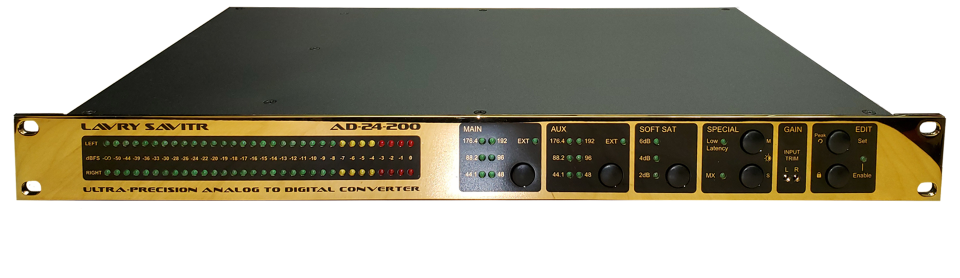
                          One of the highest quality and most expensive A-D converters, Lavry, offers 192 kHz and 21 bits out of 24.
                          That model came out only a few years ago, because before it, Lavry claimed that better precision than 96 kHz was impossible, as faster sampling creates more errors.
                          But I think technologically, 192 has become the new standard.
                          And 24 bits is also the standard, with the caveat that a cheap card probably delivers 18-19 bits in practice, while high-quality ones like this Lavry are in the range of 21-22.
                          ...
                          Every bit equals 6 decibels, so if it measures 128 dB, that works out to about 21.33 bits. This is what I'm talking about.
                          .....
                          https://lavryengineering.com/products/savitr-mwc
                          .....
                          https://lavryengineering.com/pdfs/la...ing-theory.pdf
                          .....
                          There is also another method of sampling; I don't know if it's applicable to your project or not.
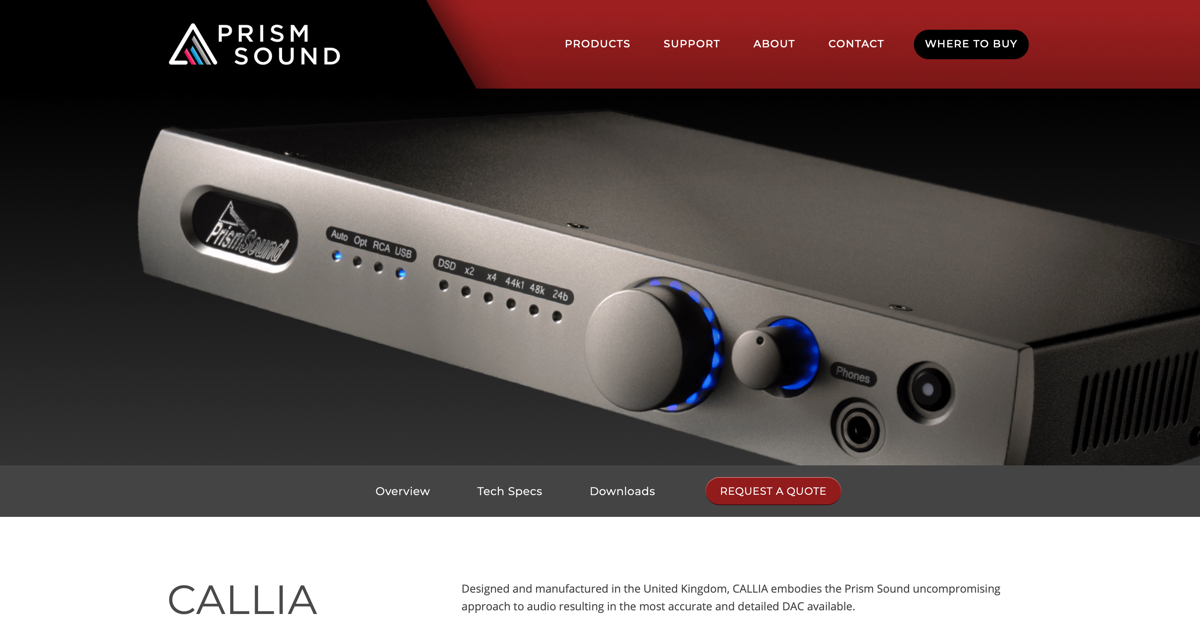
                          Also, this company Prismsound is at the top when it comes to audio A-D and D-A converters.
                          .....
                          https://www.prismsound.com/hifi/dsdtech.php
                          .....
                          Let me mention another company I know that makes testing and measurement equipment.
                          https://www.ap.com/ "


                          Basically, Aziz, the problem revolves around what you experienced as well.

                          Comment


                          • #43
                            The real truth is always buried in the details.
                            If I take top model and its specifications as a reference; the first thing that catches my eye is the latency data, ha!


                            Click image for larger version  Name:	image.png Views:	0 Size:	261.6 KB ID:	444537

                            Comment


                            • #44
                              Hi ivica,

                              thanks for your infos.
                              Nevertheless, we have to live with that, what we have.

                              Let's look at frequency response at around 90 kHz input signal on my G6 sound card.
                              Noise contribution: approx. 25 dB (mean noise floor at -94 dB)
                              Input filter signal attenuation: approx 7 dB
                              Total: 25+7 = 32 dB
                              Factor f = 10^(32/20) = 39.8 (almost 40 x)

                              We can rise the input signal with an amplifier with gain of 40 to compensate the high frequency signal loss. With additional amplifier noise contribution of course. The low frequency part will be rised from approx. -120 dB to -80 dB. I will leave a spare area for the RX amplifier on my test board.

                              I know, there are better external USB sound cards available. But the public specs are not reveailing the real performance (cheating, cheating, everwhere cheating). I have to test them by myself.

                              Cheers,
                              Aziz

                              Comment


                              • #45
                                Hi all,

                                I have been looking at the specs of the WIMA capacitors.

                                The high voltage capacitor Ct1 must withstand high voltage changes and currents. The 600 V voltage rate shown in the schematic isn't really enough. We must use at least 1000 VDC. Even higher is better (1250 VDC). As the pulse is very short (high frequency) and changing, the high frequency AC voltage ratings apply for it. If we have 500 V flyback voltage, we have to use the 3-4x DC voltage ratings. Otherwise, the capacitor Ct1 might get hot and can be damaged.

                                Best capacitors for Ct1: Pulse optimized foil capacitors with less loss.
                                Sorted from best to next best:
                                WIMA FKP1 (foil, best)
                                WIMA FKP4 (foil, next best)
                                WIMA MKP10 (metalized, next best)
                                WIMA FKPx (foil, next best other types)
                                WIMA MKPx (metalized, next best other types)

                                If your Ct1 gets hot or gives a hearable high frequency sound, look for a better capacitor.

                                The capacitor Ct2 isn't critical. It should have less loss, DC voltage rating of up to 50 - 100 V is enough. It will be operated at low frequencies (around pulse frequency).

                                Cheers,
                                Aziz

                                Comment

                                Working...
                                X